
Let the Place Lead: Designing a Wedding Around Its Setting
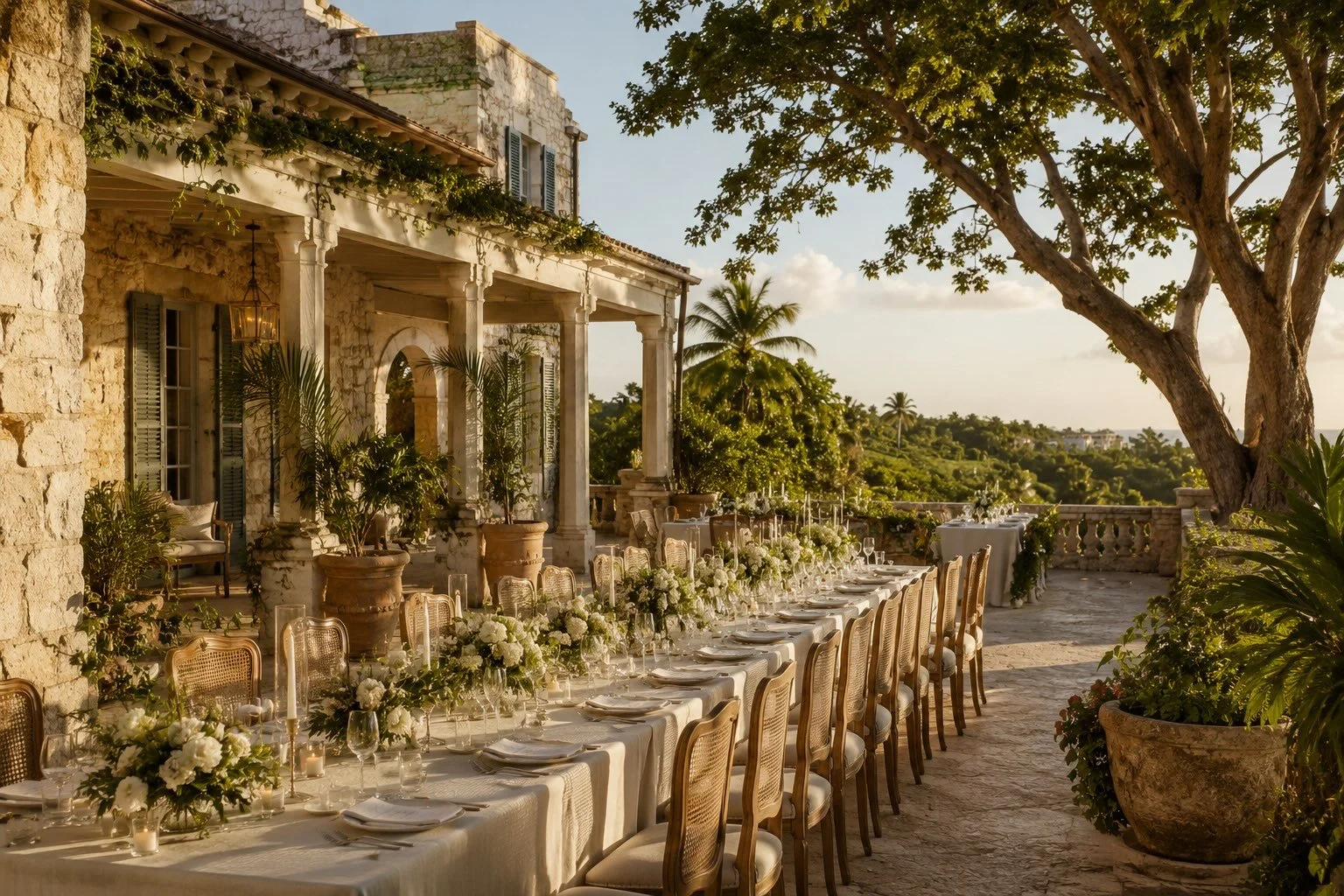
Once you have chosen a beautiful place to marry, it can be tempting to begin immediately with everything you would like to put into it.
Flowers. Linens. Furniture. Lighting. Color.
You may already have a folder filled with photographs of weddings you love. You may know exactly which flowers you want or have been saving a particular tablescape for months.
There is nothing wrong with arriving with ideas.
But before deciding what the wedding needs, spend some time looking at what is already there.
A historic estate has its own proportions, materials, landscape, light and character. Some of those qualities may become part of the celebration without requiring anything from you at all.
The question is not how to make your wedding look like the venue.
Nor is it how to transform the venue until it looks like a wedding you have seen somewhere else.
It is how the two might belong together.
Start by Observing, Not Decorating
Before choosing what to add, notice what you would be reluctant to lose.
Perhaps it is the view through a long colonnade.
The canopy of an enormous tree.
A weathered stone wall.
The color of old shutters against pale masonry.
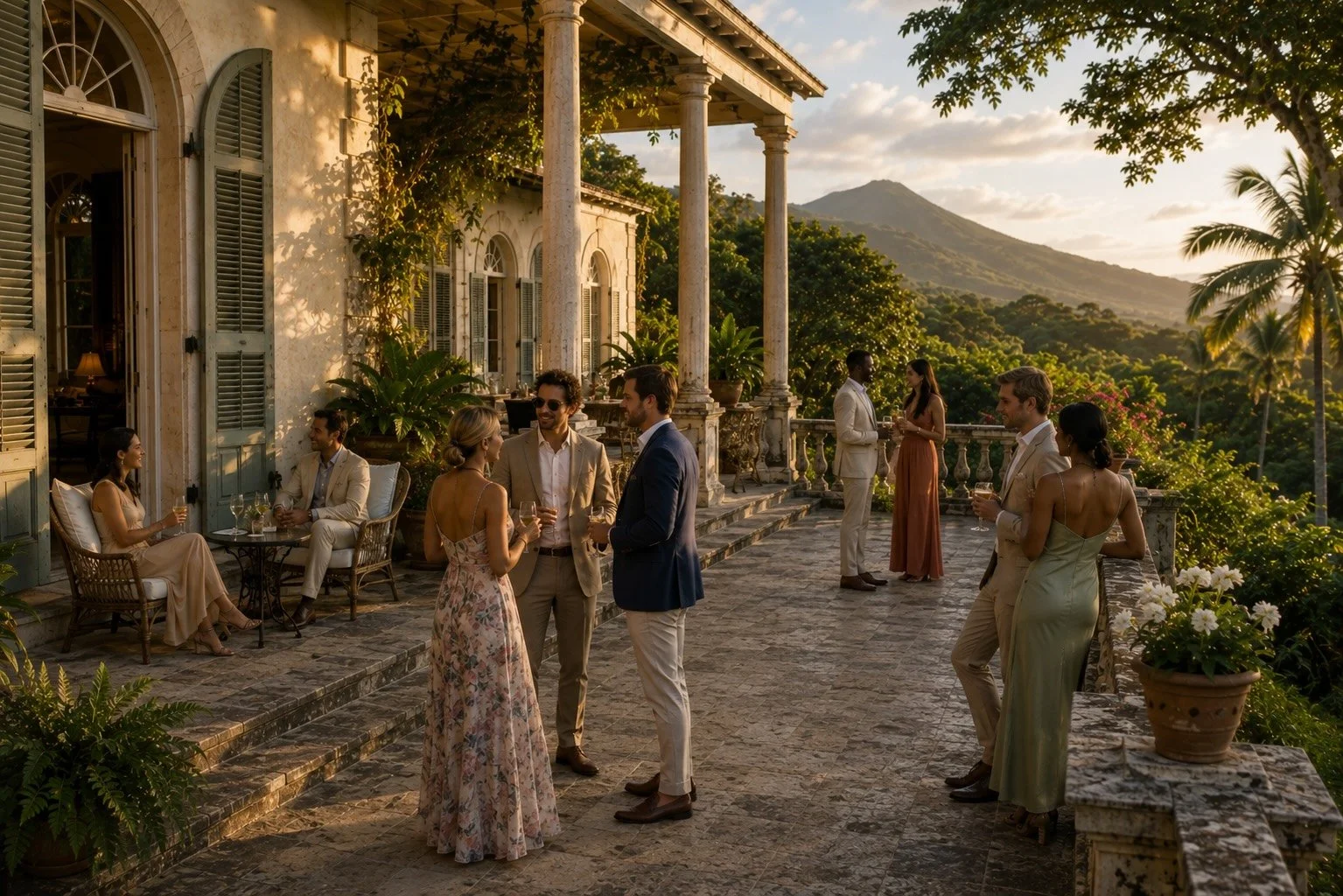
The way late-afternoon light reaches a particular terrace.
Or something less immediately picturesque: the scale of a courtyard, the rhythm of a row of arches or the transition from a shaded veranda into a bright garden.
These things are already contributing to the experience of the place.
Wedding design does not always begin by adding something.
Sometimes it begins by recognizing what does not need to be added at all.
Walk through the property as your guests will encounter it. Look from the places where they will sit, stand, gather and move.
Notice what draws your attention naturally.
Those observations give you a more meaningful starting point than beginning with images gathered from somewhere else.
Find the Place's Visual Language
Every distinctive property has its own visual language, whether or not anyone has deliberately defined it.
Architecture creates repetition, proportion and line.
Landscape introduces texture, movement and scale.
Materials contribute their own character: limestone, timber, plaster, iron, tile, linen, glass.
None of this means those elements need to be reproduced literally in the wedding design.
An arched colonnade does not require an arch motif on every printed piece. A historic stone building does not need a wedding filled with stone-colored everything.
Instead, consider what you are responding to.
The repetition of the arches might suggest a sense of rhythm and order.
The softness of an established garden might allow the design to become quieter.
The scale of the architecture might call for fewer, more substantial gestures rather than dozens of small decorative moments.
The useful question is not simply:
What does this place look like?
It is:
What makes it feel the way it does?
That answer gives you far more to work with.
Let Color Come From Somewhere
When the setting already has character, it can offer a particularly rich starting point for color.
Look beyond the obvious.
A Caribbean property does not automatically require turquoise, coral and palm green.
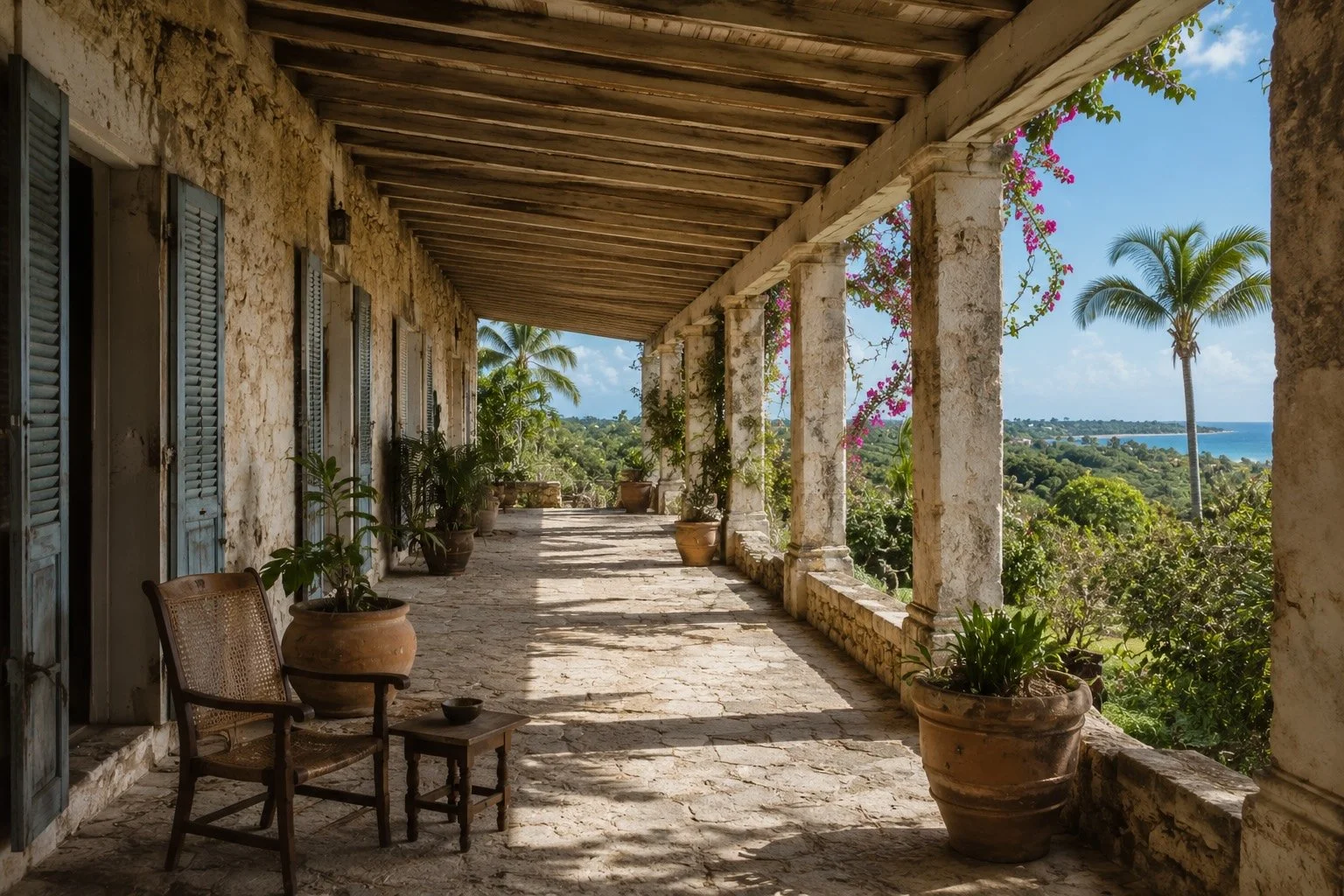
What stays with you might instead be the warmth of old limestone. Faded painted timber. Deep green foliage in shadow. Terracotta warmed by the sun. Bougainvillea against an aged wall. The soft blue-gray of the sky before evening.
The colors that belong to a place are often more nuanced than the ones used to describe it.
You do not need to reproduce them exactly. They may simply establish a direction.
The palette then begins to feel discovered rather than imposed.
Know What Not to Decorate
Beautiful venues can inspire an understandable urge to decorate every beautiful part of them.
Resist it.
If your ceremony already sits beneath the canopy of a magnificent tree, ask whether it really needs an arch.
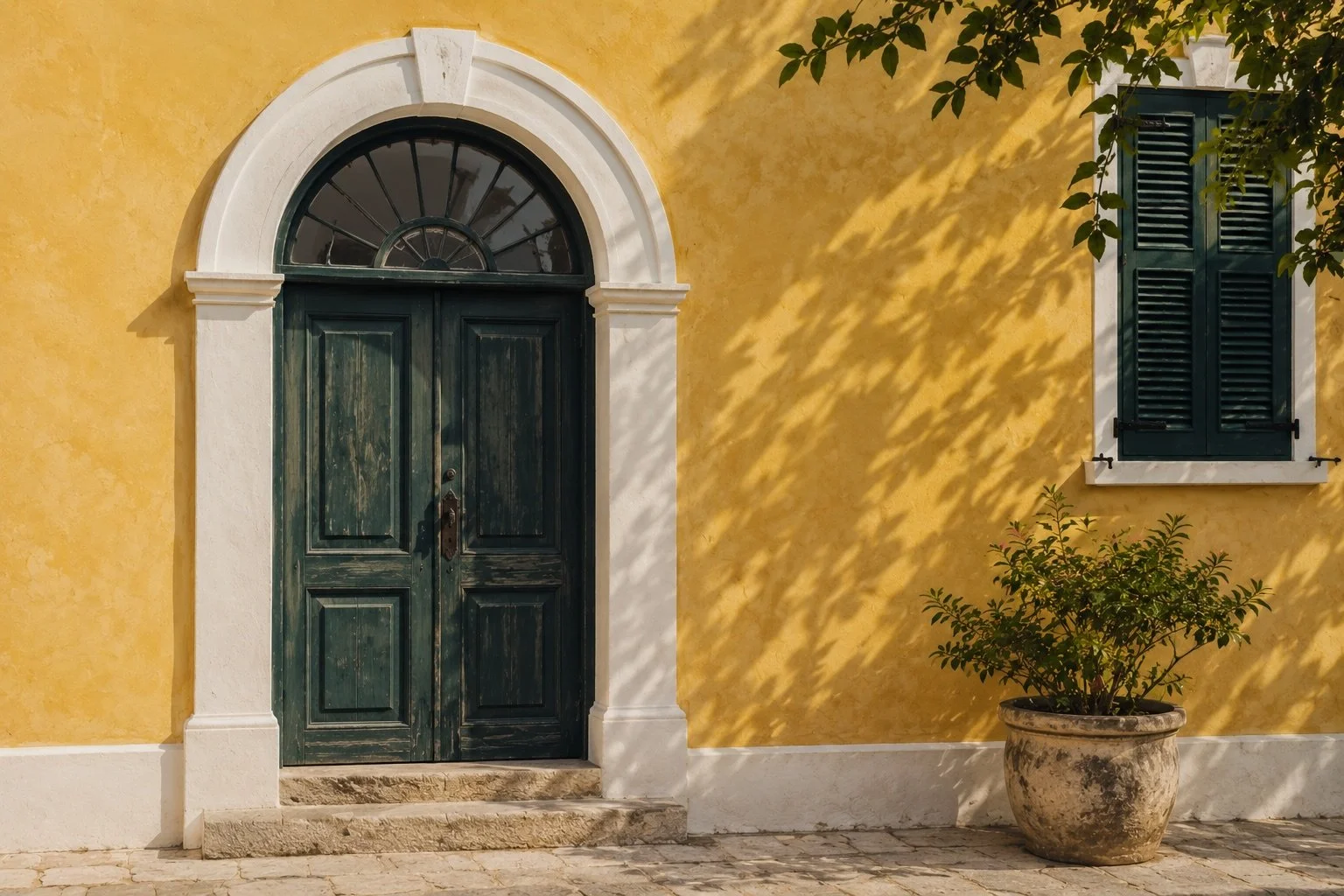
If an old stone wall provides a beautiful backdrop, consider whether covering it with draping improves the view.
If a staircase has extraordinary proportions, perhaps flowers belong at its base rather than climbing every inch of its balustrade.
Restraint does not mean leaving a wedding undecorated.
It means recognizing where design will contribute something—and where it may only compete.
Some of the strongest moments in a wedding can come from allowing architecture or landscape to stand entirely on its own.
That also gives the details you do introduce greater significance.
When everything has been decorated, very little has the opportunity to feel special.
Design for the Way the Place Changes
A venue is not experienced as a still photograph.
Light moves.
Temperatures change.
Guests move from one space to another.
A courtyard that feels bright and architectural during the afternoon may become intimate once the sun disappears and candles begin to matter.
A garden that needs very little decoration for a ceremony may require thoughtful lighting if guests will return to it later.
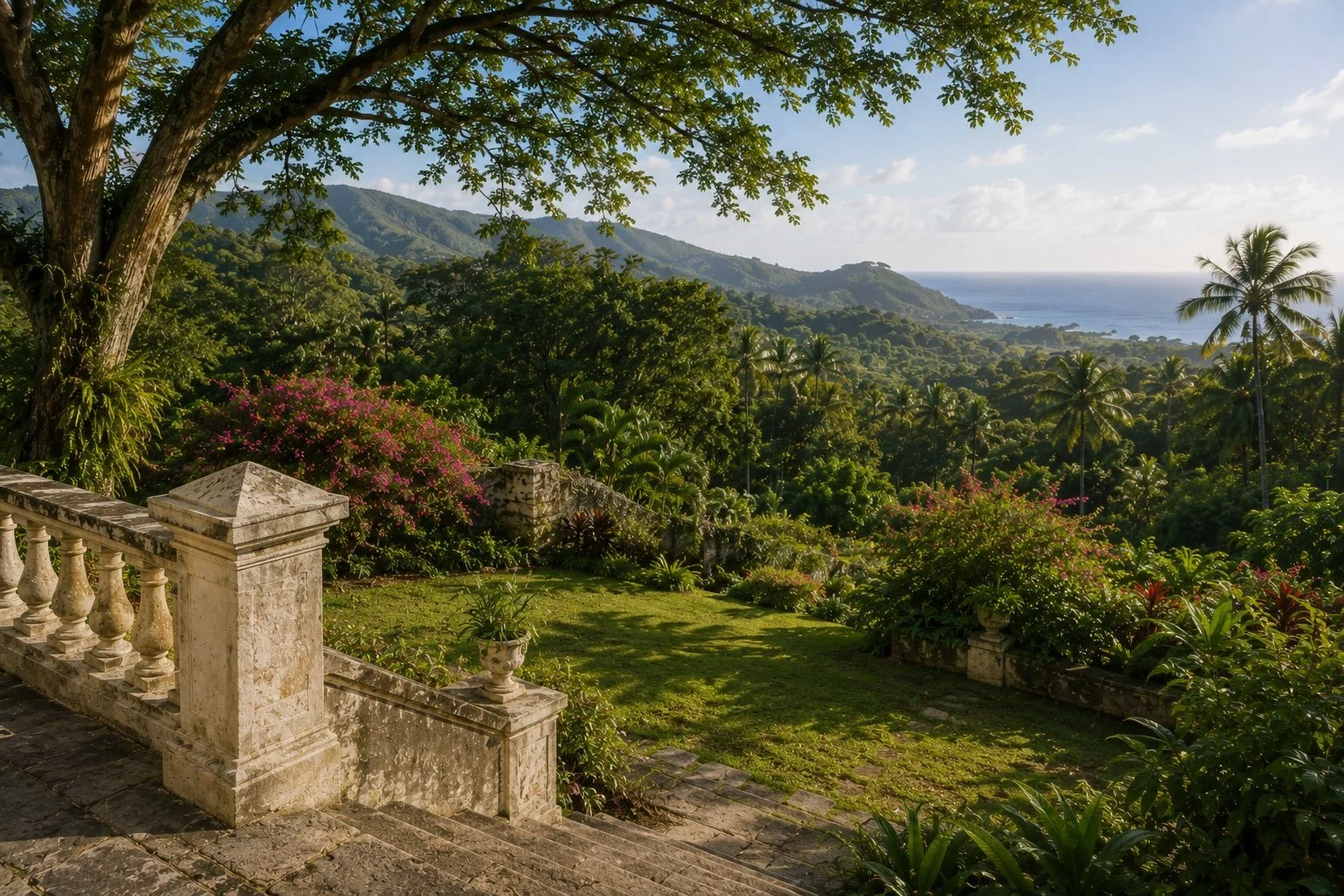
A terrace that feels exposed at midday may become the most beautiful place on the property as evening approaches.
Consider the wedding as a progression through those changes.
Where will guests arrive, and what will they see first?
Where will they gather as daylight softens?
Which parts of the property need something different from you once evening arrives?
Designing around those transitions can make the celebration feel as though it unfolds naturally through the property rather than occupying a series of disconnected spaces.
Sometimes the most important design element is not an object at all.
It is timing.
Use Local Character With Understanding
A destination wedding offers opportunities to engage with the place beyond its scenery.
Local flowers, ingredients, craftspeople, materials, music and traditions can all contribute meaningfully to a celebration.
But there is a difference between engaging with local character and collecting visual references from it.
Not everything associated with a place is simply decoration.
A motif, object or tradition may carry cultural or historical significance that is not immediately apparent to someone encountering it for the first time.
Curiosity is a better starting point than assumption.
Ask questions. Learn where things come from. Work with people who understand the place and its traditions. Where possible, allow local makers and professionals to contribute their own knowledge rather than asking them merely to reproduce something found elsewhere.
The result is usually richer anyway.
A wedding begins to feel connected to its destination not because it contains enough recognizable symbols, but because some of its choices could genuinely have emerged from being there.
Let Your Own Story Enter the Conversation
Responding to a place does not mean disappearing into it.
You are not designing a museum exhibition about the venue.
Your preferences, family traditions and things you simply love still belong in the celebration—and they will not always resemble what the setting might seem to suggest.
That can be a strength.
A contemporary couple can marry beautifully at a centuries-old estate. Strong color can find its place within restrained architecture. A family tradition may matter more than anything suggested by the landscape.
Those differences are not necessarily problems to solve.
They can create the most interesting design decisions.
The aim is not to imitate the place.
It is to understand it well enough that you know where your own ideas can enter confidently.
Sometimes that means contrast.
A clean contemporary typeface can feel beautiful against centuries-old architecture. A vivid flower can become more striking within a restrained garden. A playful detail can feel particularly personal in an otherwise formal setting.
The conversation works because both voices remain recognizable.
Look for Coherence, Not Matching
One of the easiest ways to make a wedding feel designed is to make everything match.
It is also one of the least necessary.
The flowers do not need to be precisely the same color as the envelope.
The linens do not need to reproduce a shade found in the building.
The invitation does not need to feature an illustration of the venue.
The bridesmaids do not need to become walking extensions of the tablecloth.
What matters more is whether the choices seem to understand one another.
Does the formality of the stationery make sense for the setting?
Do the flowers feel appropriately scaled for the room or landscape?
Do the materials on the table sit comfortably beside those in the architecture?
Does the lighting support the atmosphere you have been creating throughout the day?
Coherence comes from relationships, not repetition.
When those relationships are considered, individual elements have room to retain their own character.
That is often what makes the whole celebration feel richer.
When the Place and Celebration Belong Together
The most successful relationship between a wedding and its setting may be one guests never consciously notice.
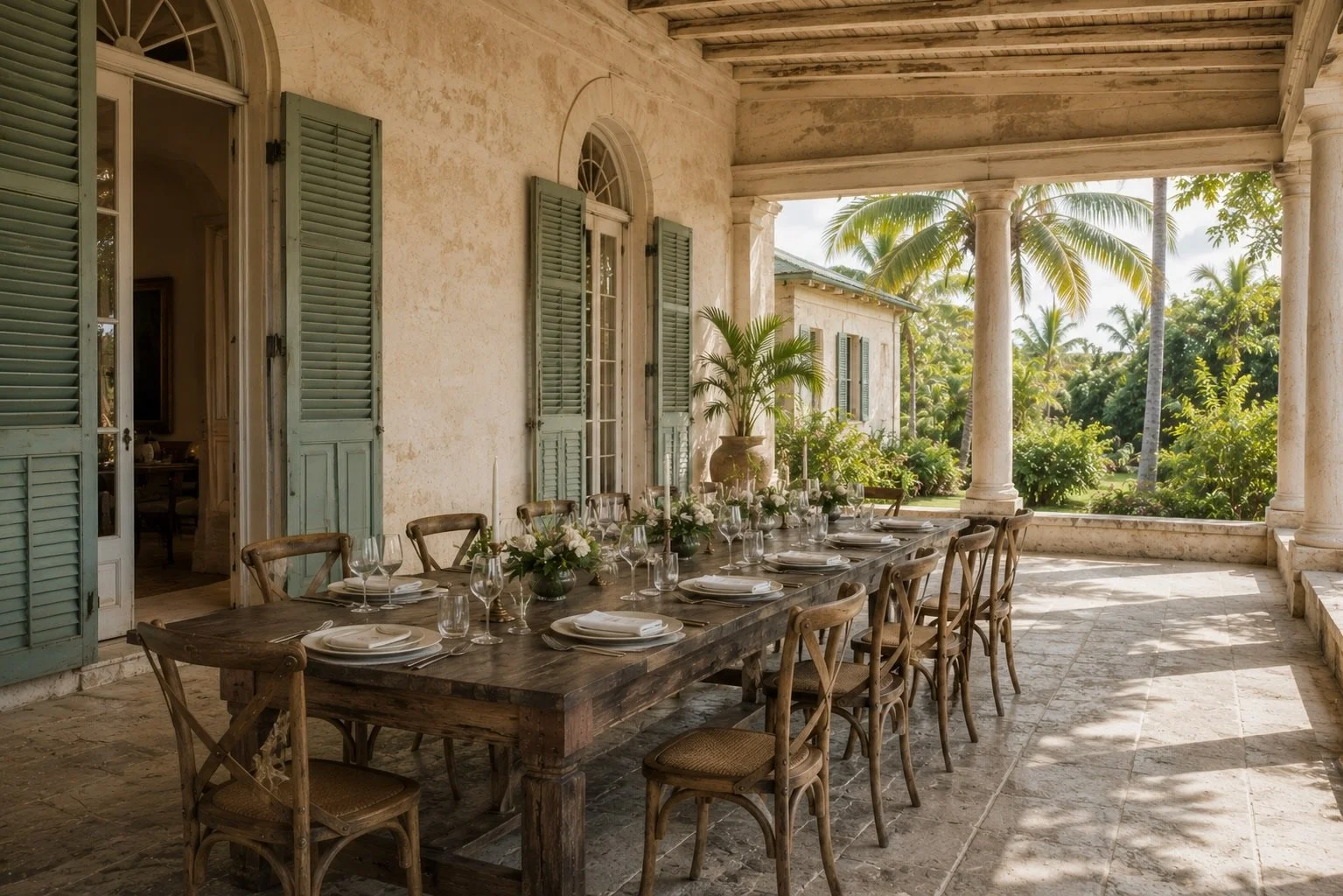
They will not necessarily identify that the flowers echo the looseness of the garden, or that the scale of the tables responds beautifully to the courtyard.
They may never know that a color in the stationery came from something you noticed on the property months earlier.
They simply experience the celebration as a whole.
Dinner feels as though it belongs in that courtyard.
The flowers look as though they could not have been arranged quite the same way anywhere else.
The stationery makes sense when it appears again at the table.
As evening falls, the property seems to become part of the celebration rather than merely its backdrop.
That is very different from designing a wedding to match a venue.
It is also different from transforming a place until its own character can no longer be seen.
The goal is not to make the venue look like your wedding.
Nor is it to make your wedding look like the venue.
It is to create a celebration that could only have belonged beautifully to both.