
Why Historic Caribbean Estates Make Extraordinary Wedding Venues
There is a particular kind of beauty that cannot be arranged in the days before a wedding.
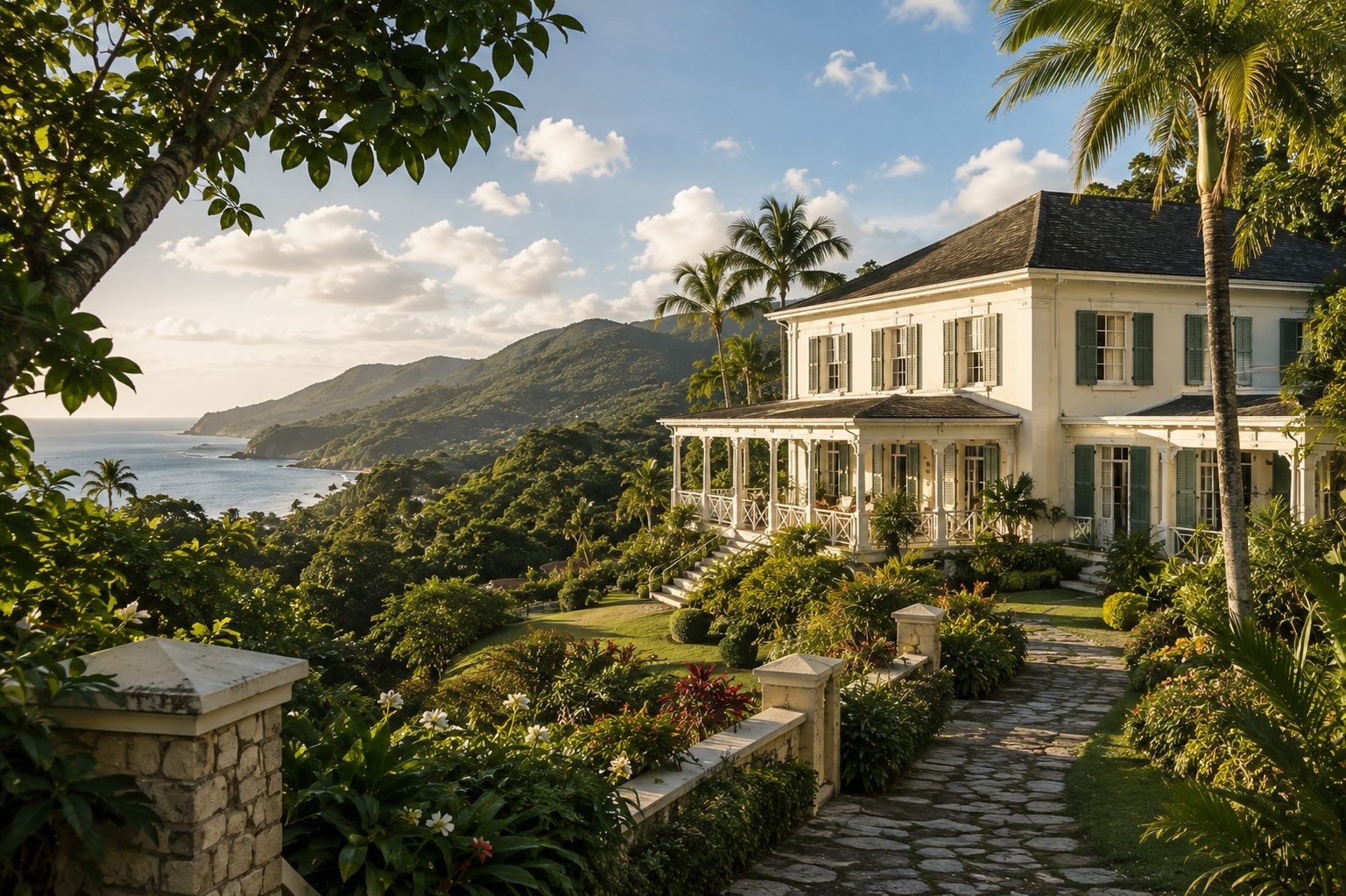
It is already there in the weathered stone beneath your feet, in shutters opened to catch the afternoon breeze, in a veranda that has looked across the same landscape for generations. It is there in mature palms and flowering trees, in paths disappearing into established gardens, and in rooms whose proportions were determined long before anyone considered where the floral arrangements might go.
As afternoon gives way to evening, guests move from garden to terrace. Light changes across the building. Somewhere beyond the grounds, the Caribbean Sea catches the last of the sun.
None of this was brought in for the wedding.
That is precisely the point.
Some venues provide a beautiful backdrop for a celebration. Others contribute something more difficult to manufacture: a sense of place. At the Caribbean’s most distinctive historic estates, architecture, landscape, history, and local character become part of the experience itself—giving a wedding a place to which it can genuinely belong.
A Sense of History
History changes the way a place feels.
Not simply because a building is old, but because time leaves evidence. Materials weather. Gardens mature. Buildings are adapted and cared for. Stories accumulate around rooms, paths, and grounds.
At Pedro St. James in Grand Cayman, an eighteenth-century Great House stands within seven acres of landscaped grounds overlooking the sea. Today, weddings can move between secluded garden spaces, the Great Lawn, and the historic house itself. The property is not dressed to resemble an estate for the occasion; the estate is the starting point.
Travel farther through the Caribbean and the architectural language changes completely. In Old San Juan, Puerto Rico, wedding settings include Spanish colonial buildings, centuries-old fortifications, and walled tropical courtyards. Museo Casa Blanca dates to 1521; Hotel El Convento began as a Carmelite convent more than 350 years ago.
They look nothing alike—and that matters.
There is no single Caribbean heritage aesthetic. The region’s history has produced distinct architectural and cultural landscapes from island to island. What connects its most compelling historic venues is not a particular style, but the presence of something already established: a character that the wedding can respond to rather than invent.
History, of course, deserves more than aesthetic nostalgia. Across the Caribbean, historic properties may carry complicated histories connected to colonialism and plantation economies. Appreciating the architecture or landscape need not mean romanticizing everything that preceded us. Understanding a place fully means making room for the whole story.
Architecture That Gives the Celebration Character
A remarkable building does more than look beautiful in photographs.
It gives a celebration form.
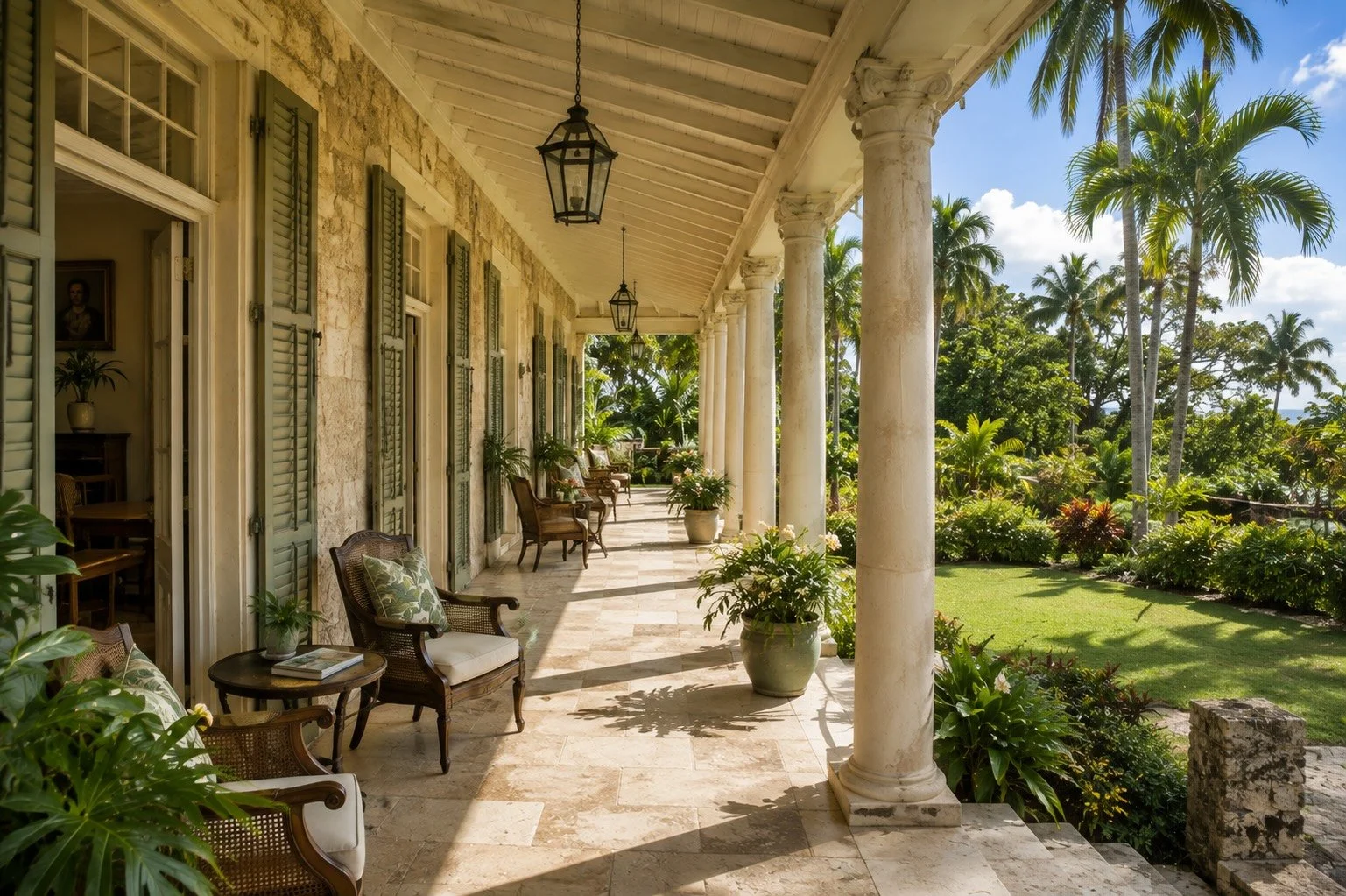
A veranda creates a natural place to gather. A courtyard offers intimacy. A broad lawn changes the scale of a ceremony. A terrace can turn dinner into an evening overlooking the landscape. Great rooms, staircases, colonnades, and covered walkways create transitions without requiring temporary structures to manufacture them.
Round Hill in Jamaica illustrates this particularly well. Across the property, weddings can make use of the Spa Lawn, overlooked by an eighteenth-century Great House; the stone Hanover Terrace surrounded by tropical foliage; the Georgian Room; and spaces overlooking the Caribbean Sea. Each feels distinct, yet all remain recognizably part of the same place.
That coherence is valuable.
Rather than beginning with an empty room and asking how to transform it, a couple can begin by asking what the architecture already offers.
Where does the light fall in late afternoon? Which view deserves to remain unobstructed? Where do guests naturally want to gather? Which architectural detail is beautiful enough that adding more would diminish rather than enhance it?
The building has already begun the design conversation.
Gardens That Cannot Be Created for a Weekend
Then there are the gardens.
A florist can transform a room in a matter of hours. A mature landscape cannot be commissioned on Thursday for a Saturday wedding.
Established gardens possess something quite different from event décor: time.
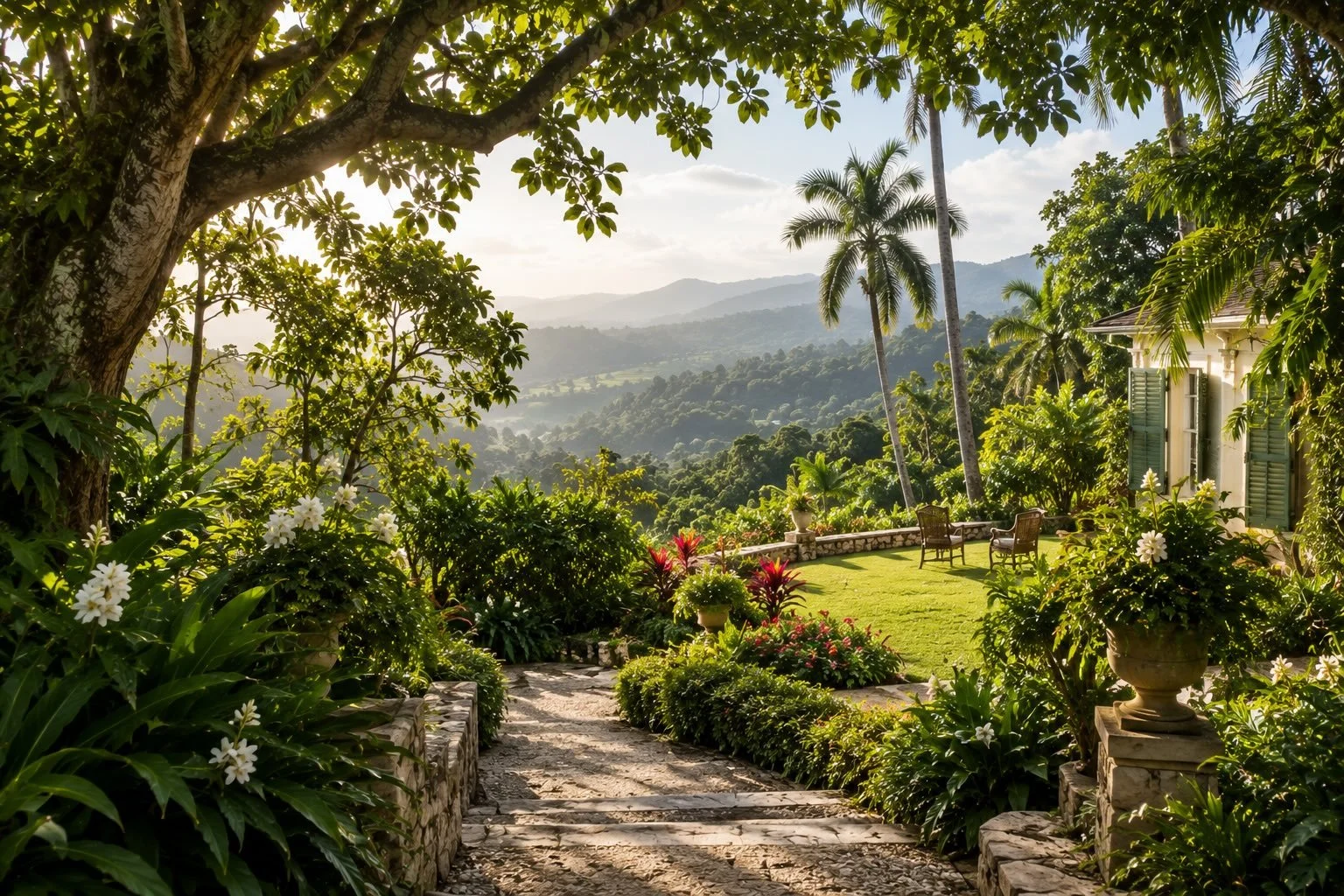
Trees have reached their scale gradually. Paths have settled into the landscape. Canopies cast shade where generations of growth have allowed them to. Plants coexist with buildings in ways that can be imitated temporarily but never quite replicated.
At Strawberry Hill in Jamaica’s Blue Mountains, that sense of time is particularly tangible. Since the property’s cultivation as a coffee farm began in 1890, years of careful development have shaped its mountaintop gardens. Across its 26 acres, approximately 350 endemic and exotic plant species have been catalogued, while stone paths wind among coffee, fruit trees, and tropical vegetation.
For a wedding, a landscape like this does not need to become scenery.
It already is.
Flowers and other design elements can complement it, certainly, but the more interesting creative question is often not What can we add?
It is What is already here that deserves to be noticed?
That principle extends well beyond gardens. Some of the most considered wedding design begins not with decoration, but with observation.
A Celebration Rooted in the Caribbean
A wedding in the Caribbean need not become a generic tropical wedding transported from somewhere else.
Nor does adding palm leaves automatically give a celebration a meaningful relationship with the place in which it is being held.
The Caribbean is far too varied for that.
From Jamaican estate architecture and Blue Mountain gardens to Caymanian great houses and the Spanish colonial streets of Old San Juan, the region offers no single visual language.
The same is true beyond architecture. Food, flora, music, craftsmanship, history, and traditions vary across islands and communities.
For couples planning a destination wedding, this creates an opportunity to move beyond simply decorating a venue and instead become attentive to where they actually are.
That does not mean turning local culture into a collection of motifs to be borrowed for effect. Quite the opposite. A thoughtful relationship with place begins with curiosity and respect: understanding the property, working with people who know it well, noticing what grows there, learning what has shaped it, and allowing genuinely appropriate details to emerge from that understanding.
The question becomes less:
What Caribbean elements can we add?
and more:
What naturally belongs here?
The distinction is subtle, but the celebrations it produces rarely are.
A Natural Sense of Progression
Historic estate properties often offer another advantage that is easy to underestimate when looking at photographs: they give a wedding somewhere to go.
The celebration can unfold through the property.
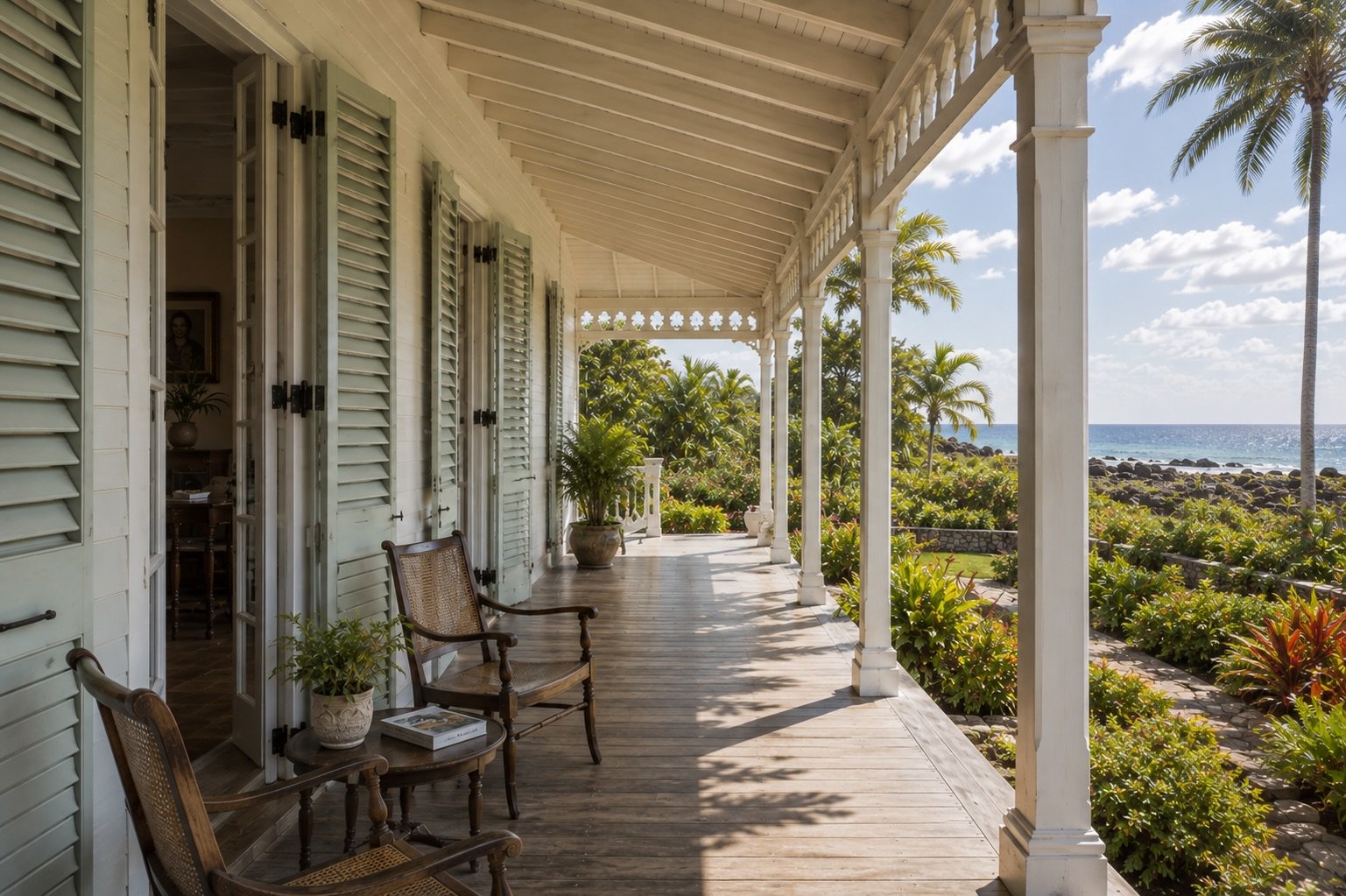
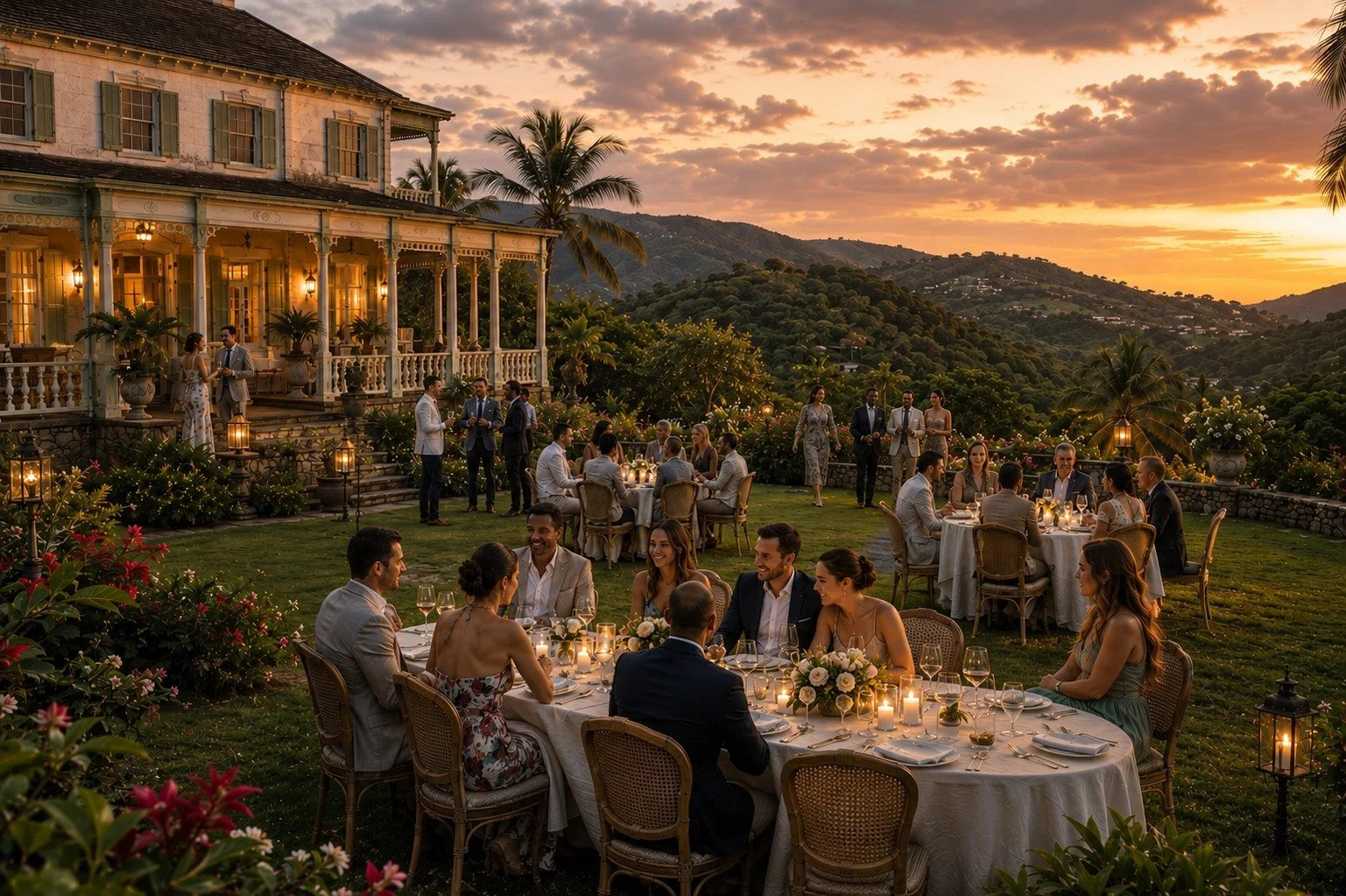
Guests might arrive through a garden before gathering for the ceremony on a lawn. Cocktails draw them toward a veranda or terrace. Dinner reveals another part of the estate as evening falls. Dancing takes them somewhere different again.
Round Hill’s variety of lawns, terraces, interior rooms, and waterfront spaces makes that progression possible within one coherent setting. Pedro St. James similarly offers the Great House, expansive lawns, and more secluded garden areas within the same historic grounds.
This is especially meaningful for destination weddings.
Guests may have traveled hundreds or thousands of miles to be there. The venue can therefore become more than the location of the ceremony and reception; discovering it becomes part of the hospitality extended to them.
A wedding that moves naturally through a property creates a sequence of experiences.
The estate is not simply seen.
It is encountered.
Beauty That Doesn’t Depend on Trends
Historic architecture does not know this year’s wedding trends.
Neither does a mature garden.
And therein lies part of their appeal.
When the character of a celebration is rooted in something that already possesses identity, there is less pressure to manufacture one through whatever visual language happens to dominate wedding imagery at the moment.
That does not mean every estate wedding should look traditional.
Timelessness is not a synonym for beige.
A celebration can be colorful, contemporary, exuberant, or deeply personal while remaining responsive to its setting. What gives it longevity is not adherence to one particular aesthetic, but the sense that its choices were made for reasons more enduring than fashion alone.
The strongest choices feel connected to their surroundings rather than applied over them.
The result does not need to look as though it belongs to another century.
It simply needs to look as though it belongs.
From Place to Paper
That sense of belonging can begin long before guests arrive.
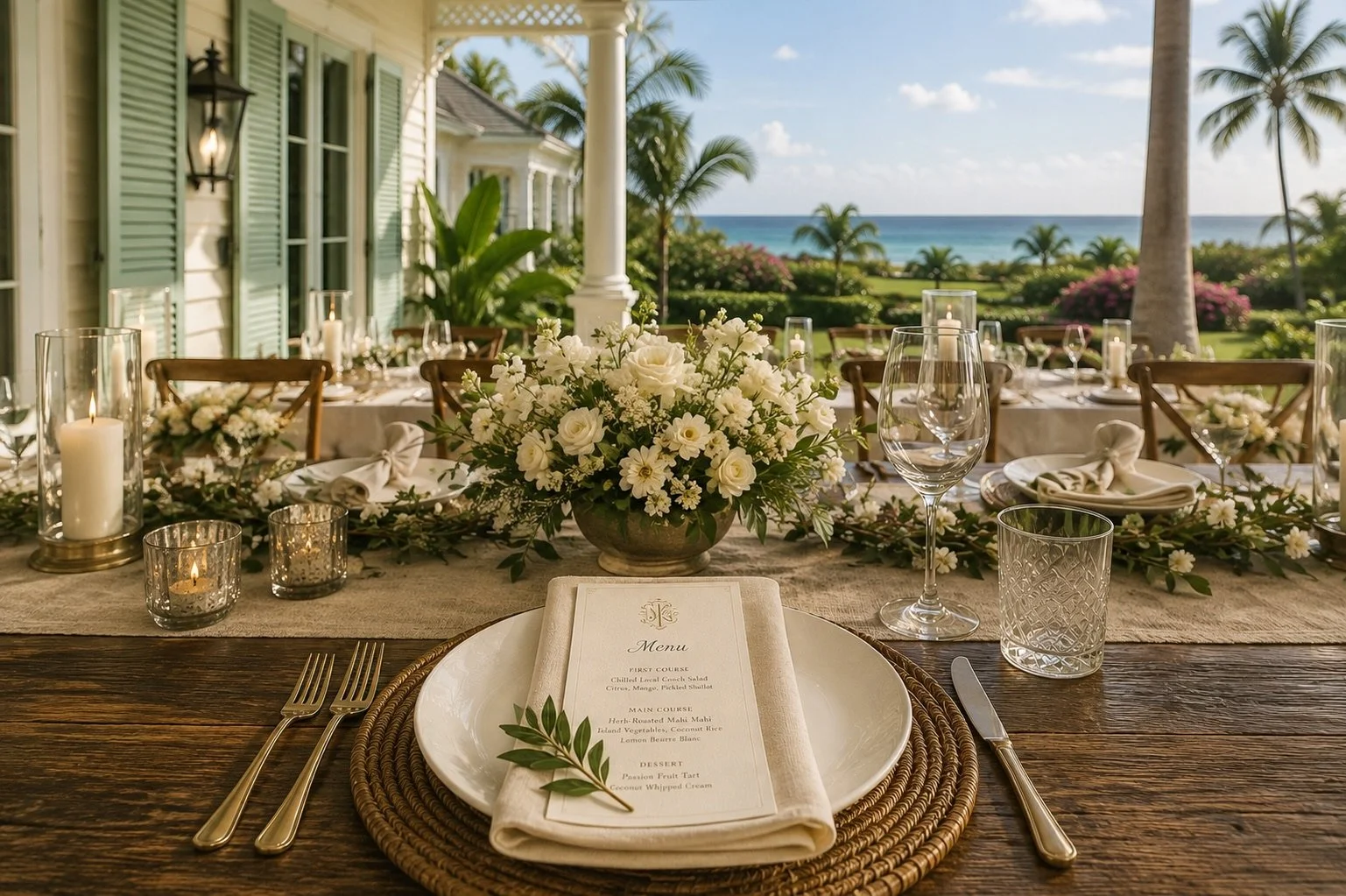
An invitation is often their first encounter with the world of a wedding. When the celebration itself has been shaped thoughtfully by its setting, the stationery can take its cues from the same place.
Architecture might suggest proportion, line, or ornament. A garden might influence color. Historic details might inspire illustration. The atmosphere of the property might call for something formal and tactile—or something lighter and more relaxed.
The goal is not to reproduce the venue on paper.
The invitation should feel as though it belongs to the same world.
That idea sits at the heart of the Heritage Collection—wedding stationery designed with the same attention to place, character, and belonging.
Explore the Heritage Collection →
A Place Worth Belonging To
Beyond the practical questions of choosing a wedding venue, another remains:
What can this place contribute to the celebration that nowhere else could?
At their best, historic Caribbean estates offer more than beautiful rooms and impressive views. Their architecture gives form. Their landscapes carry time. Their histories provide context. Their distinct relationship with their island gives the celebration somewhere to belong.
They do not offer a theme to imitate.
They offer a place to respond to.
And when a wedding has been created with that kind of attention, the setting does not disappear once the flowers are taken down and the last guest has gone home.
It becomes inseparable from the memory of what happened there.