
Round Hill: A Jamaican Estate Shaped by Place
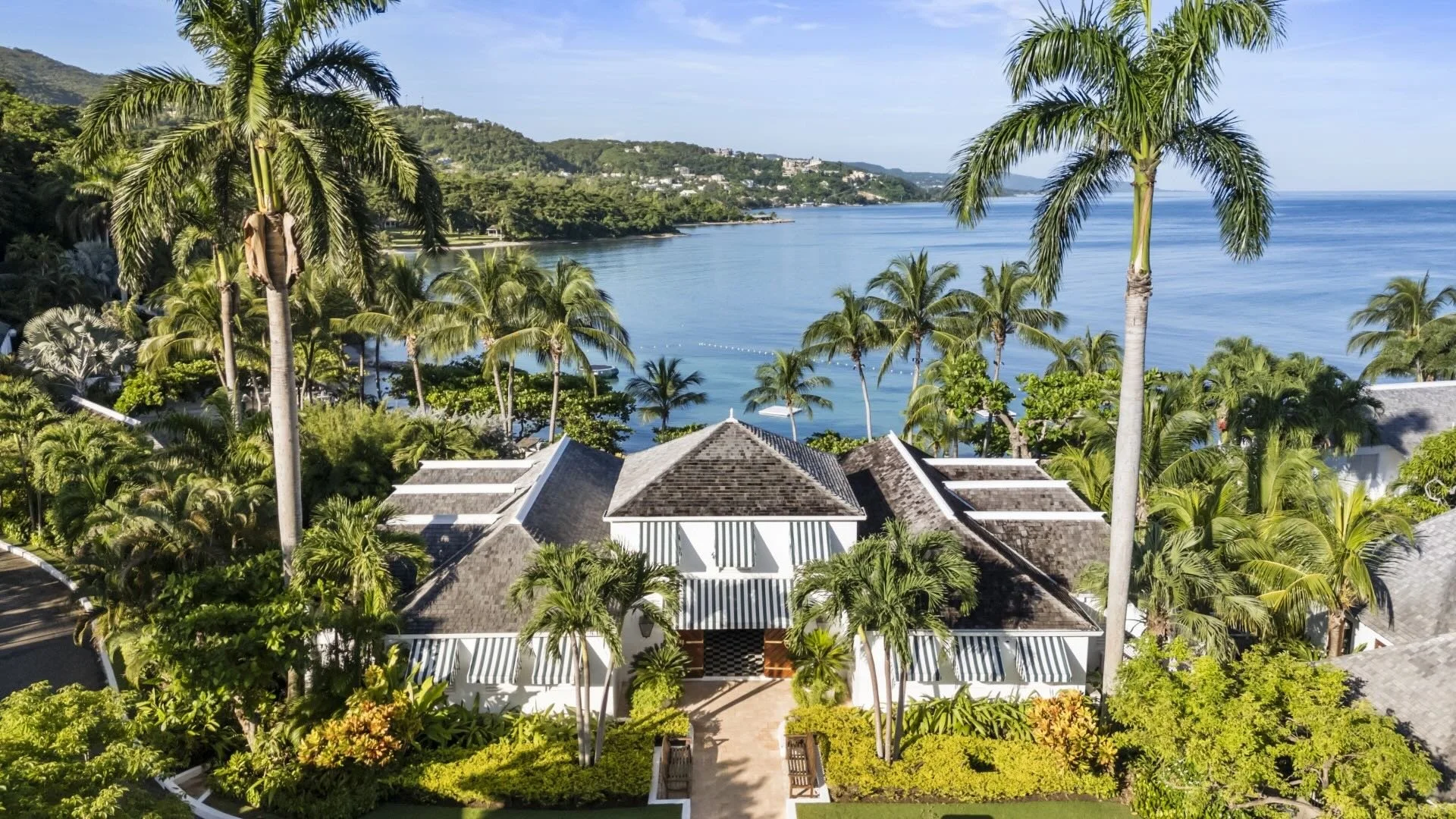
There are places whose identity can be understood almost immediately.
At Round Hill, it appears in the relationship between things.
White-painted architecture against dense tropical green. Deep verandas opening toward bright Jamaican light. Louvered windows and high ceilings responding to warmth and breeze. Villas that differ from one another while still seeming to belong to the same hillside. And always, beyond them, the Caribbean.
None of those things alone explains Round Hill.
Together, they begin to.
The property near Montego Bay has been welcoming hotel guests since 1953, but its sense of place reaches in more than one direction: backward through the history of the land, outward into the landscape around it, and forward through generations of additions and interpretations that have allowed Round Hill to change without becoming unrecognizable.
That may be one of the most interesting things about it.
Because what allows a place to evolve without losing itself?
A Place With More Than One History
The story of Round Hill did not begin when its first hotel guests arrived.
The land has a considerably older history, and surviving remnants of the original estate remain part of the property today. Round Hill's own heritage material identifies ruins of an earlier Great House and sugar works on land that now includes a nature preserve and working farm.
That earlier history also includes the estate's place within Jamaica's plantation economy, where enslaved people worked the land.
It is important to distinguish that history from the Round Hill Hotel & Villas that exists today.
The modern chapter began in 1952, when part of the estate was sold to Jamaican-born entrepreneur John Pringle for the development of a hotel. Round Hill opened the following year, introducing an approach that would become fundamental to the property: a central hotel joined by privately owned villas.
The idea created something different from a conventional resort.
There would be shared hospitality, but also private homes. A recognizable Round Hill identity, but room for individual expression.
That tension has shaped the property ever since.
The Idea That Made Round Hill Different
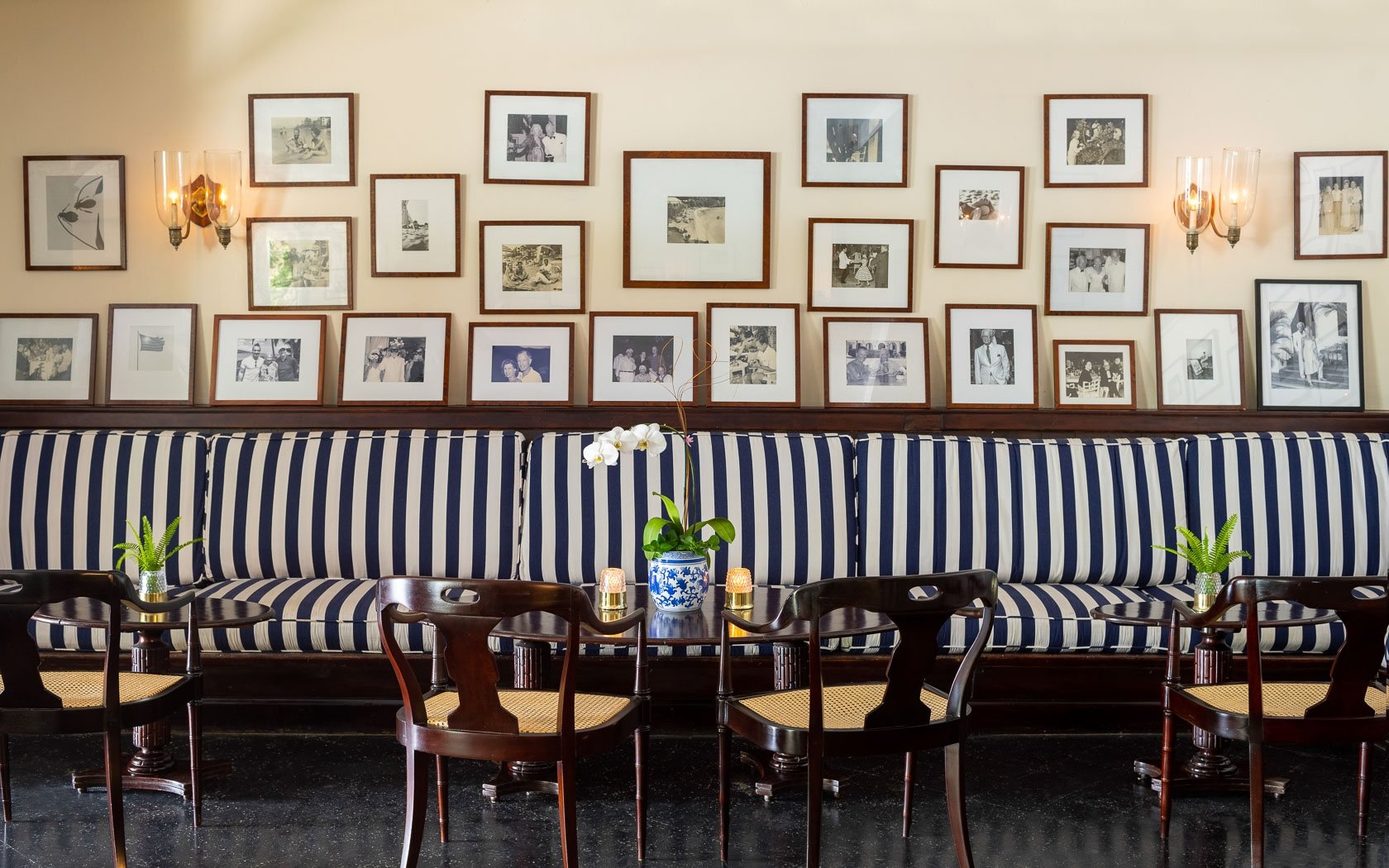
Pringle's original model placed individuality into the structure of Round Hill from the beginning.
Rather than asking every part of the property to express a single prescribed style, the villa concept allowed individual owners to create homes with personalities of their own while remaining part of a larger estate.
Today, Round Hill has 27 private villas, each individually owned and uniquely designed.
That model presents an interesting design problem.
How can a place accommodate so many individual decisions without eventually becoming a collection of unrelated ones?
Round Hill's answer appears to lie less in uniformity than in the strength of the world those villas inhabit.
The landscape is shared.
The climate is shared.
Certain architectural relationships recur.
And despite differences from one villa to another, each remains part of a place with an identity larger than itself.
Different, but Still Belonging
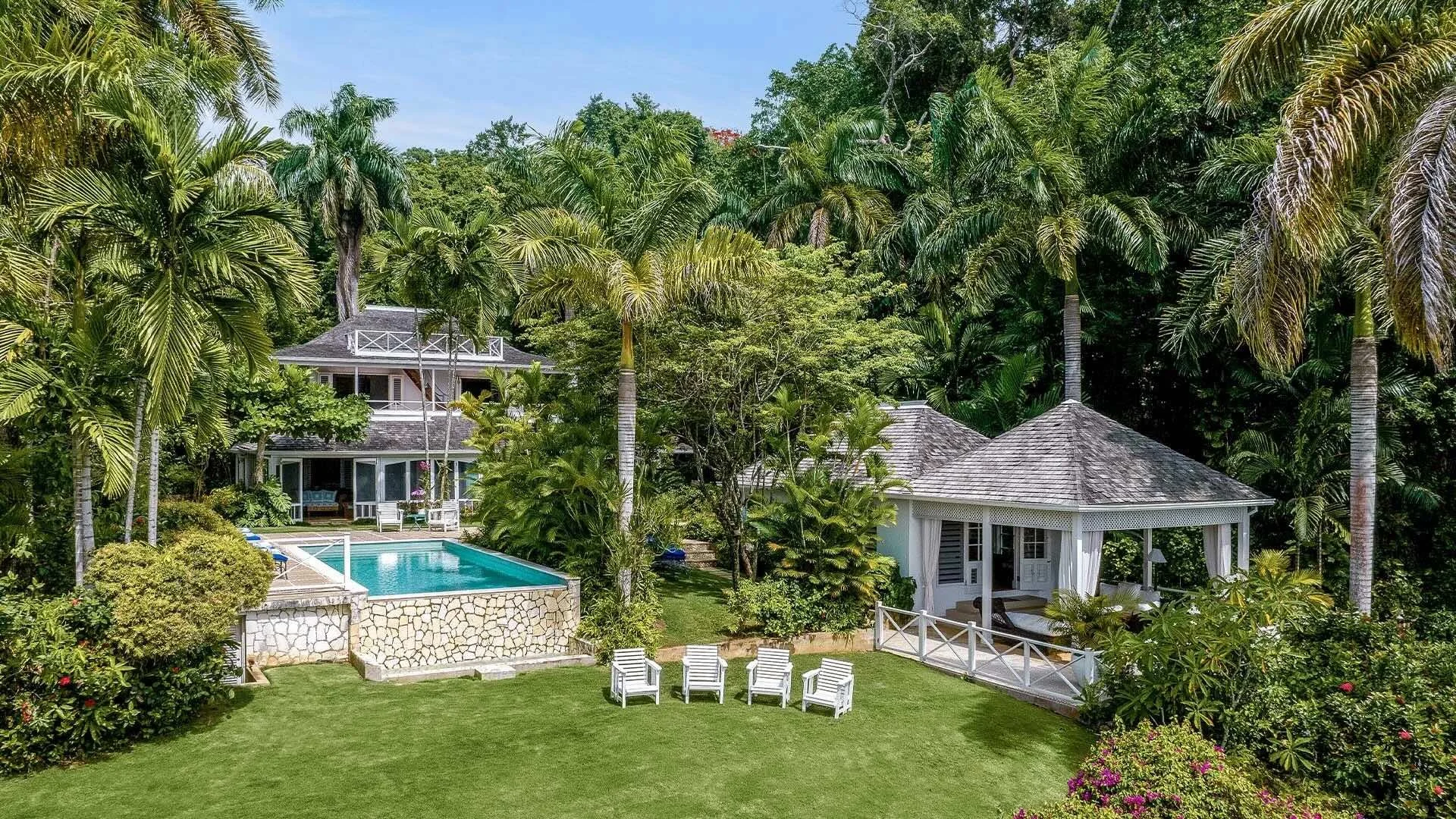
Look closely at the architecture and the connections become easier to see.
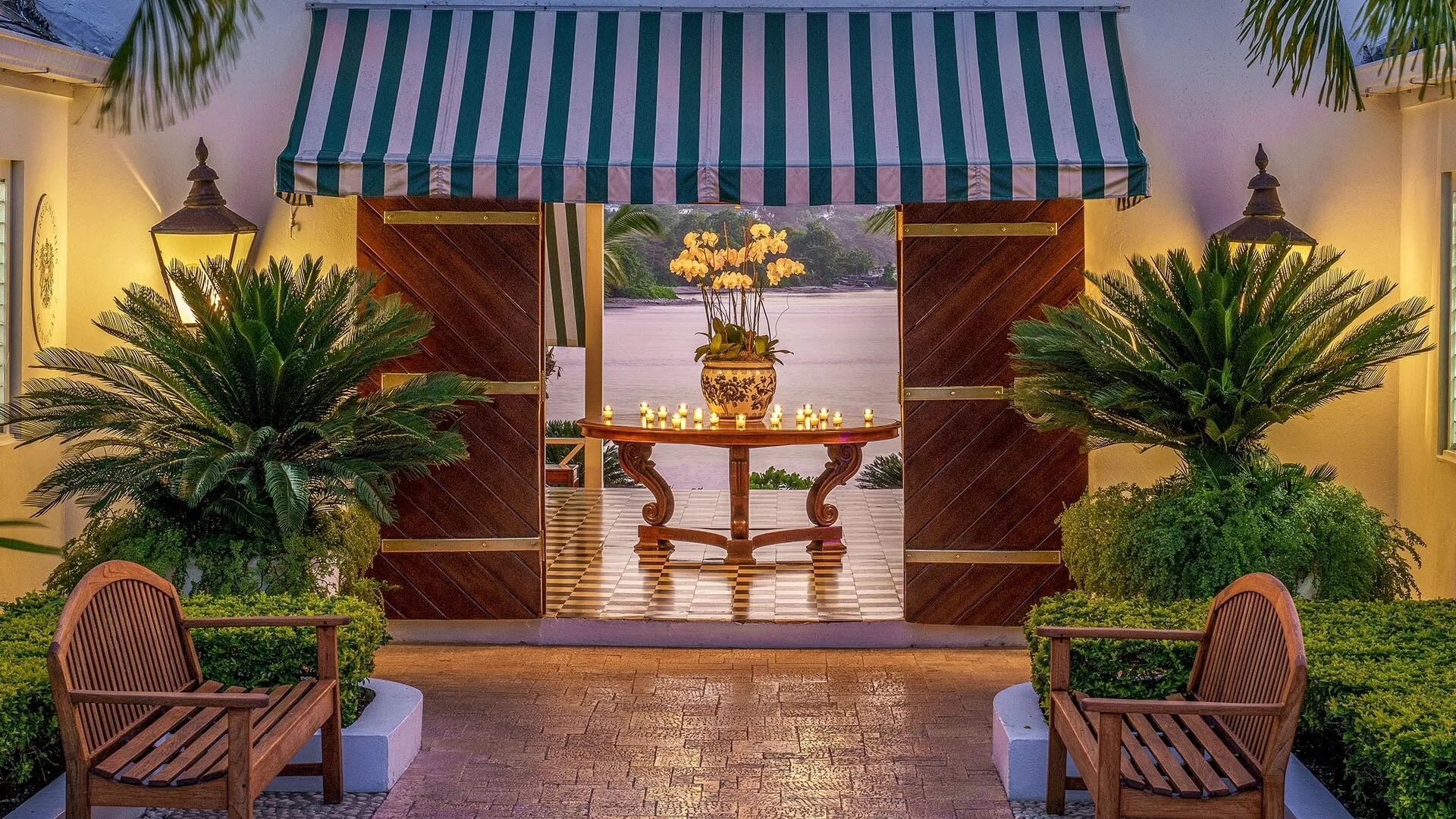
Traditional Round Hill cottages have been described through recurring elements such as cedar-shingle roofs, shaded verandas, white-painted timber columns, louvered windows, crisp mouldings and high ceilings.
Those elements establish a vocabulary rather than a template.
One villa can interpret them differently from another. Interiors can change. Owners can introduce their own preferences. Individual buildings can develop distinct personalities without requiring the one beside them to do the same.
The result is variation held together by something deeper than matching.
Even newer interpretations can enter that conversation.
Round Hill's oceanfront rooms, for example, feature interiors designed by Ralph Lauren, offering a contemporary interpretation of the property's Caribbean character.
It is another example of how a new interpretation can become part of an established setting without requiring that setting to become somewhere else.
A strong sense of place does not necessarily resist new ideas.
It gives them something to respond to.
Architecture That Belongs to the Climate
Round Hill's architecture is most convincing when it is understood not merely as a style, but as a response.
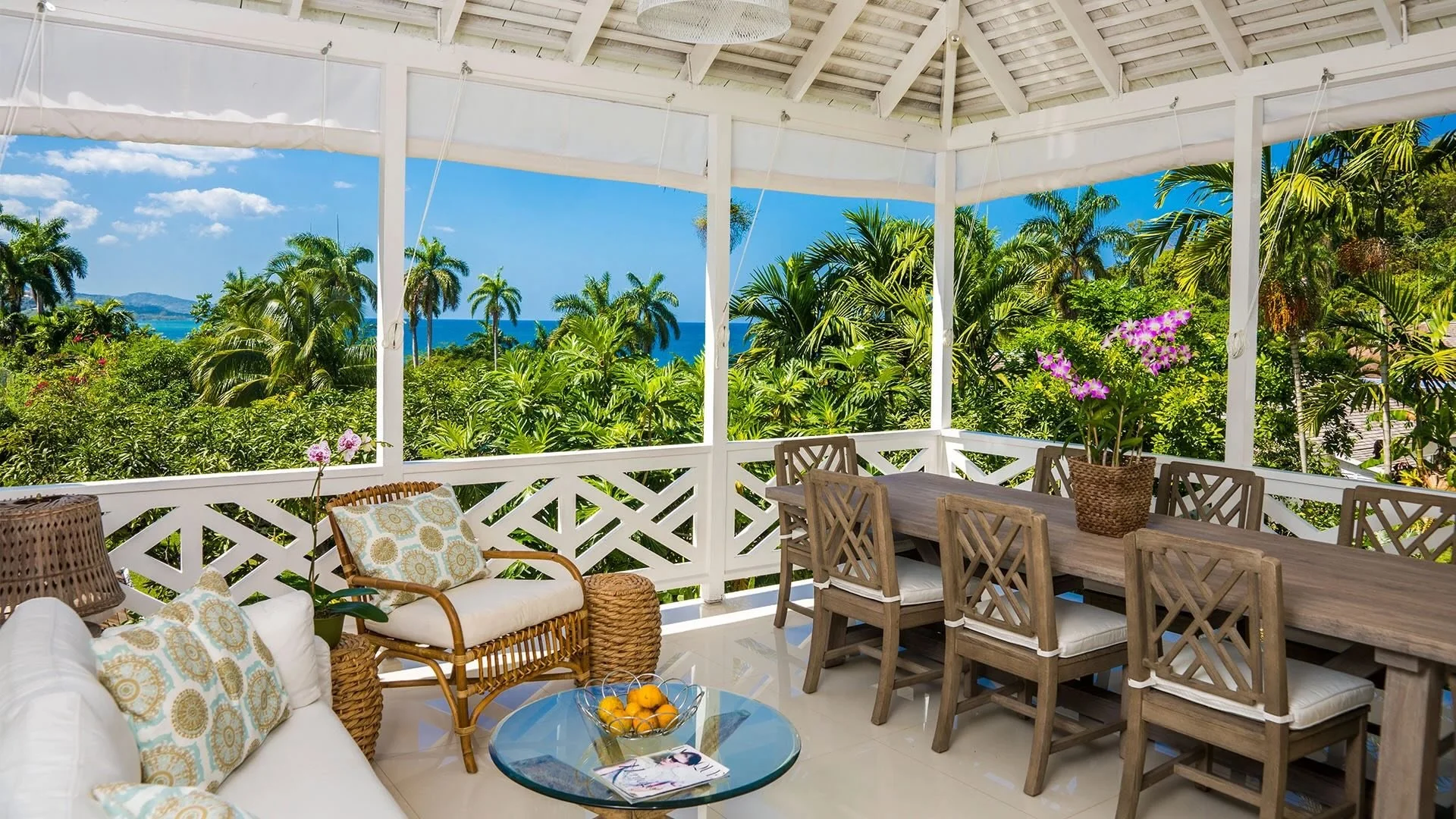
Verandas create shade. High ceilings allow rooms to breathe. Louvered windows mediate light and air. Open living spaces extend toward gardens, terraces and views.
The buildings repeatedly negotiate the boundary between indoors and out, allowing landscape and climate to become part of the experience rather than something observed through glass.
Architectural accounts of the property describe cottages that respond to terrain, prevailing winds, existing trees and views. Round Hill's villas continue that relationship through open-air and enclosed living spaces designed around indoor-outdoor life.
That is different from adding tropical details to architecture that could exist anywhere.
The most convincing regional architecture often belongs to its place because it has learned something from living there.
At Round Hill, the Jamaican climate is not simply outside the buildings.
It has helped shape them.
The Landscape Is Part of the Architecture
Then there is the land itself.
Round Hill unfolds across hillside, mature vegetation and Caribbean coastline, continually altering the relationship between building and view. The property also retains areas connected to its earlier agricultural history, now incorporating a nature preserve and working farm.
But the landscape matters for more than its beauty.
It creates privacy and shade, shapes approaches and frames views. A glimpse of sea between buildings feels different from an uninterrupted horizon. A path through mature planting changes the experience of arrival. A terrace perched above the shoreline relates to the property differently from a lawn surrounded by green.
The buildings appear to occupy the landscape rather than replace it.
That may be why the relationship between architecture and setting feels so fundamental to Round Hill's identity. Neither is merely a backdrop for the other.
They make sense together.
And for a wedding, that matters.
A Celebration Can Move Through the Place
Round Hill does not offer only one way to experience it, so a celebration held there does not have to remain in one kind of space.
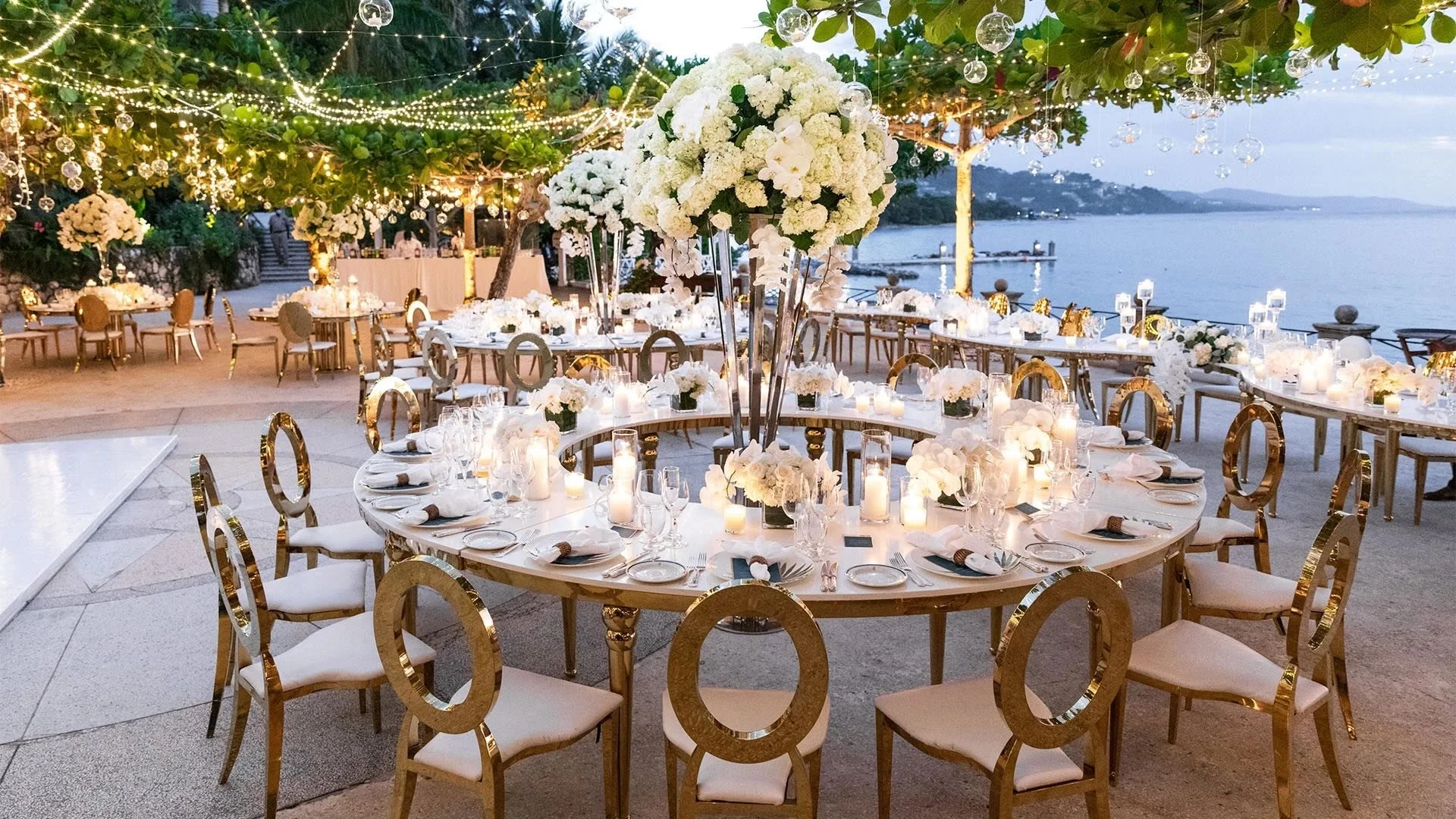
Its event settings move between lawn, terrace, interior rooms, beach and waterfront. The Spa Lawn places a ceremony or gathering against tropical landscape and an eighteenth-century Great House; Hanover Terrace opens toward hillside and Caribbean views and connects with adjoining indoor settings, allowing celebrations to move between open-air and enclosed spaces; and the beach and Infinity Pool Sun Deck bring a celebration directly to the water's edge.
The useful observation is not how many people each can hold.
Those numbers may matter when planning.
They matter less when understanding the place.
What is more interesting is that each setting offers a different experience of Round Hill.
A ceremony need not feel like cocktails.
Cocktails need not feel like dinner.
Dinner need not feel like the evening that follows.
As a celebration moves, the property changes around it: light shifts, views open and close, and architecture gives way to garden or sea.
The wedding is not simply taking place at Round Hill.
It can unfold through it.
What Round Hill Already Gives You
That is worth remembering before deciding what else a wedding needs.
Round Hill already has a visual vocabulary.
White against green. Dark timber against pale architecture. The geometry of shutters and rhythm of columns. Aged stone, garden texture and filtered shade. Bright Jamaican sunlight. The changing blue of the Caribbean beyond it.
Those things do not constitute a wedding color palette, nor should they be treated as one.
The point is not to copy them.
A louvered shutter does not need to become a motif simply because it exists. A green visible in the landscape does not need to appear on every printed piece. A destination does not become more meaningful when its most recognizable details are repeated everywhere.
Instead, the setting can help establish what belongs.
It can suggest what feels natural.
What feels excessive.
What might disappear against the surroundings.
What might become more beautiful because of them.
The question is not how much of Round Hill can be incorporated into the wedding.
It is how much the wedding can understand about where it is.
Let the Wedding Belong There Too
There is something fitting about asking that question at Round Hill.
For decades, individual owners, architects and designers have brought different ideas to the property. The villas have developed distinct personalities. Interiors have changed. New interpretations have appeared.
Yet difference has not automatically meant disconnection.
The strongest additions seem to understand that entering an established place does not require either imitation or erasure.
A wedding can do the same.
A couple should bring themselves to it—their story, their families, their traditions, their tastes and the things that make the celebration recognizably theirs.
A sense of place should never become a costume that the couple is expected to wear.
But neither does personal expression require the setting to disappear.
There is room for both.
Perhaps that is what Round Hill ultimately demonstrates so well.
Its identity has never depended on freezing one moment in time. The property has changed because people have continued to inhabit it, reinterpret it and add to it.
What endures is not perfect sameness.
It is relationship.
Between architecture and climate.
Between individuality and coherence.
Between buildings and landscape.
Between what was already there and what came later.
And that may be the most useful lesson Round Hill can offer a celebration held within it.
A wedding does not have to look like Round Hill in order to belong there.
It only needs to understand that it has arrived somewhere that already has a story.